
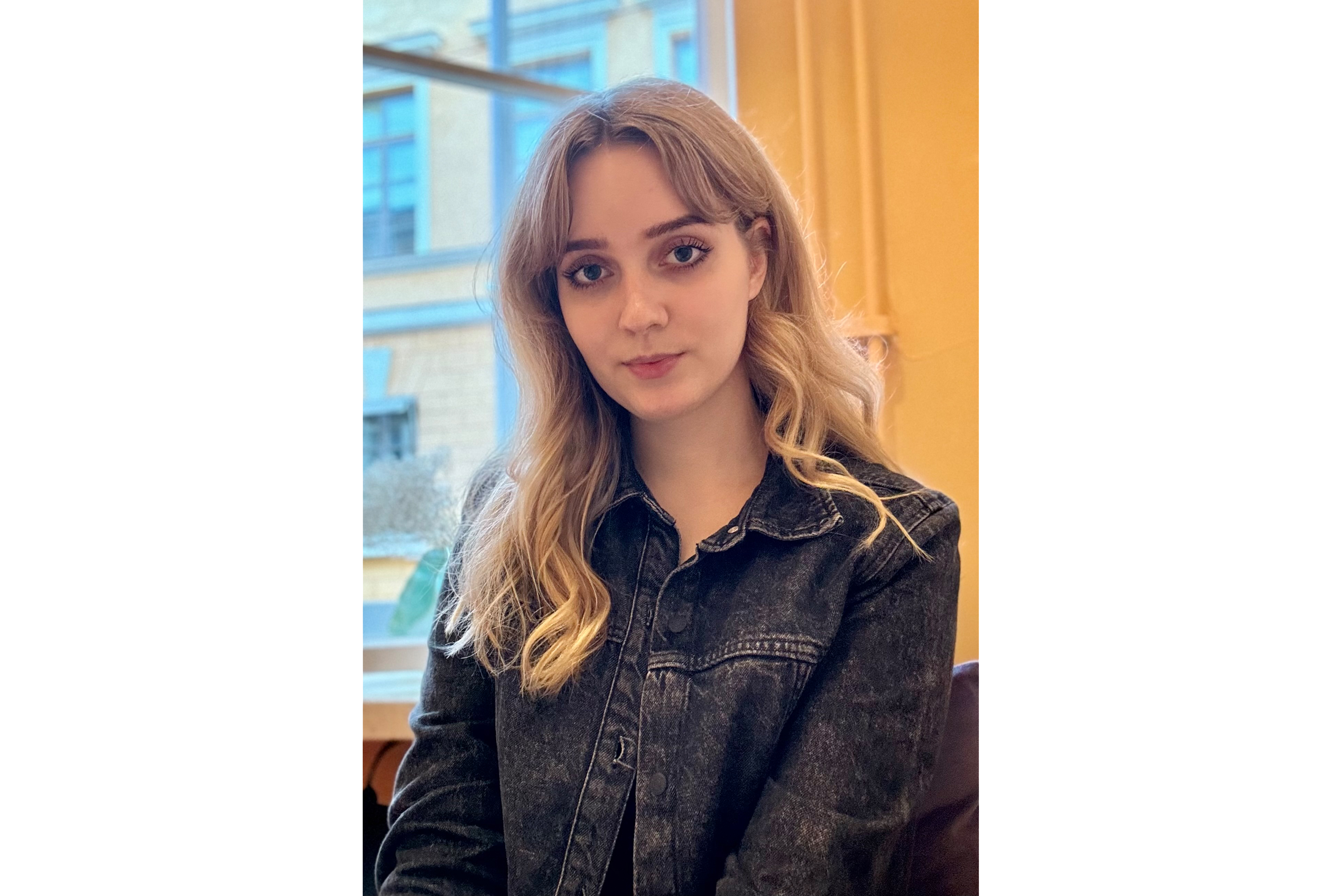
Floodwater
by Pauliina Korento
The thing – until now living as Linnea, a young woman – closes the apartment door behind it, carrying a suitcase and a large trash bag. The thing didn’t like to leave things messy. This was a habit its late mother had instilled in it from an early age: just in case, even for an impromptu trip to the kiosk across the block, their house had been left impeccably clean.
The thing struggles down the apartment stairs with the suitcase and trash bag. Its progress is slow and clumsy, but it eventually reaches the second floor where Hanna lives. Even while the thing had been Linnea, Hanna had not been a friend, but rather a band-aid distraction. She didn’t deserve it, but it was much easier to drop off the bag at hers instead of the recycling center halfway across the city.
After catching its breath enough to speak, the thing rings the tinny bell on Hanna’s door. The door opens, and she greets the thing with a drowsy smile. Her face is ruddy with the remains of a Friday night out, and she smells of cigarettes she doesn’t smoke. The thing extends the bag to her, and Hanna accepts it with polite hesitation.
“Are you sure? It’s a bit more than you made it seem.” She peers inside, then lifts out a frilly sleeve. “I thought you loved this dress!”
“It doesn’t fit me anymore.”
Hanna hums and eyes the thing’s suitcase. “And what’s that? More donations?”
“No, it’s a dead body. I’m dumping it up north, and going off-grid in the wilderness.”
“I’d believe you more if you just left it at the body.”
“I really am going.”
“Girl, are you serious?” Hanna whirls around to lug the bag into her apartment, then steps out to grab the thing’s shoulders. “We really need to catch up soon! I’ve just been so busy with my thesis; I haven’t left the house since Christmas!”
“Yeah, okay.” The thing detaches from her hold. “But, I need to go catch my train now.” Hanna waves the thing goodbye with a smile, then closes her door. The thing staggers down the last flight of stairs, suitcase in tow.
The view along the train tracks hasn’t changed one bit. Familiar porch swings swaddled in reindeer pelts, familiar farms with unfurling yarn fences, and familiar families strolling on tractor tracks pass by. Grey skies, brown rivers, and black forests repeat in the distance. In no time at all, the conductor announces the thing’s hometown as the next station, and in just a blink more the train stops. The thing almost forgets its suitcase in the rack: it rushes back down the aisle to fetch it, and hops out of the train when the conductor is already whistling for departure.
The thing’s father and an unfamiliar, big-bellied woman wait at the platform. When he spots the thing walking towards them, he raises his hand in greeting.
“Hey! How’s it going?” He reaches out an arm, as if to hug, but then thinks better of it. “Was the trip okay?”
“Yeah, fine.”
“I’ll get that for you.” He reaches out for the suitcase, but the thing recoils. He retracts his arm again. “I would’ve got you a plane ticket if the train was inconvenient.”
“You can’t bring a moose rifle on a plane.”
The unknown woman lets out a clap of laughter. The father looks over at her, then clears his throat. He motions for them to start walking. The unknown woman waddles after him, linking her arm with his. The thing follows them several steps behind. They stop at an unfamiliar minivan parked at the far end of the station. When the thing catches up, the father grabs its suitcase and clicks the trunk open.
“Oof!” He lifts the suitcase with a grunt, then slots it in with a matrix of battered cardboard boxes and carelessly re-sealed paints and varnishes. The unknown woman sits in the front passenger side. The thing goes to the backseat. The backseat is also cramped with buckets and boxes.
“You know, you could’ve stayed with us,” The father says as he starts the car and maneuvers towards the road.
“I didn’t want to intrude.”
“You can’t intrude your own home, silly,” he chuckles and switches gears. “But I guess it is exciting to stay at a hotel sometimes, right? Like a staycation.”
“And someone else cleans up after the guest leaves.”
“C’mon,” For a second, his amicable tone veers towards a familiar annoyance. “You’re not a guest; you’re my daughter.”
“It really would’ve been no trouble,” the unknown woman chimes in. “We’re always happy to host visitors.”
In twenty-five minutes, they arrive outside a two-story wooden house. The roof is half-covered with a tarp, and the always-fussy herb garden has been bulldozed for a barbecue deck. The same old oak stands in the corner of the yard. Its branches have been generously hacked, and its roots are swallowed by a brush of junipers.
The father comes up behind the thing. “When were you last here? A year? Two years?”
“Four years.” The thing follows him up the garden path to the porch stairs.
“No,” he chuckles, turning around to clap the thing’s shoulder. “It hasn’t been that long.”
He takes out his keys from his utility vest and unlocks the front door. He directs the unknown woman to go in first, then steps in himself, followed by the thing. Just after the door closes, and the thing reaches down to remove its shoes, an unfamiliar teenage boy barges into the entrance.
“Mom! Oh my God,” he squeaks, “You need to leave freakin’ now!” A choir of vocal-fry-voices, thumping music and clinking glasses filter in through the door separating the entrance from the living room. The father takes the thing’s shoulders and pivots it around. He opens the front door again, and takes the thing out.
“Looks like we’ll have to go out to eat,” he says as the door clicks shut.
“But – my room–”
“We’ll come back for dessert. Don’t worry.” He walks the thing to the front passenger side of the car. “How about Da Mario? You up for some Italiano?”
The thing hums and climbs in.
They sit waiting in the car for close to fifteen minutes. After some questions about the thing’s studies – fine, whatever – and some silence, the father turns on the radio. He sings along quietly, occasionally drumming a solo on the steering wheel. Eventually, the unknown woman comes back in the car. Her short, skunk-striped hair is teased up into spikes.
After they’ve sat down at Da Mario, and ordered their drinks and dinner sets, the thing asks a question. The words hang limp in the air. The father sets down his beer glass on the coaster. The unknown woman stops gnawing on her oily pizza crust.
“How ‘bout we slow down with the drinks,” the father finally says, reaching out to stabilize the thing’s glass teetering on the edge of the table.
“You can’t even say it.
“Say what?”
The thing’s lip twitches.
The father glances around, then whispers pointedly under his breath. “I honestly don’t know where this is coming from.”
“How could you let your own kid do that?”
“Do what? You were not a kid; you were eighteen.” He looks at the thing, furrowing his brow. “And here I thought we were having a nice time.”
The thing takes the shared olive oil ramekin and pours it in his beer. “Unbelievable–” the father finally raises his voice, but cuts himself off when the unknown woman moves her hand on top of his fist gripping the table cloth. He takes a deep breath. “Look, I’m sorry you feel that way.” Another breath. “But that’s not what happened.” He lets go of the table cloth.
“You know, Linnea,” the unknown woman speaks up. “You need to understand it hasn’t been easy on him. He lost his wife.”
The thing doesn’t say anything, only breaks out into a faint smile as the layer of oil settles on top of the beer. The father glances over at the unknown woman. She reaches out to smoothen the wrinkle between his greying eyebrows.
“Let’s just enjoy our dinner,” he says, bumping his knee on the table leg as he brings his chair in. The dull thump of the thing’s empty glass toppling onto the carpet alerts their passing by waiter. He clears their half-eaten mains and the oily beer, then brings over their desserts.
The sun has set while they were at Da Mario. They drive back to the house in quiet darkness; the only noise is a triplet of tuned mopeds speeding past. The plants in the garden – the old oak and the juniper brush – are now illuminated by solar-charged spotlights. The tarp on the roof has detached in one corner, flapping listless in the wind.
The unknown woman hops out of the car while its still running, and waddles inside. The thing sits still in the back seat. The father looks at it in the rearview mirror, gripping the steering wheel so hard his knuckles turn white.
“Let’s forget about the restaurant.” He says. When the thing doesn’t reply, he reaches back, fumbling for its arm among the tower of boxes. The thing stays still, and he latches on tight. “Hey, listen. How about we make a deal?”
The thing stays quiet.
“You’ll come to the cottage to meet the rest of the family in July. You don’t have to stay for the christening, but come for a few days. I’ll buy you the plane tickets.” He pauses. “Or train tickets, if you want to bring your – what did you say again, moose rifle?” He chuckles a little, squeezes the thing’s arm, then lets go to turn off the ignition. “Sometimes you’re a bit ridiculous. You know that, right?”
Just as he unbuckles his seat belt, the unknown woman comes rushing back into the car.
“I think we better just go to the hotel.” She tuts. “That boy! The house isn’t exactly guest-ready anymore.”
Without a word the father re-buckles his seat belt, restarts the car, and reverses back into the street.
They arrive at the hotel lobby. The thing and the unknown woman wait next to the elevators while the father checks the thing into its room. Then, he walks over to them with the thing’s suitcase. The thing presses the elevator call button and turns to address the unknown woman.
“Who are you, exactly?”
“What,” she blinks, “Oh. It’s Teresa, dear.”
“Are you a psychiatrist or what?”
“I’m more of a grief counselor, but I have to say, I feel like I know you already with the amount Tom” – she pats the father’s arm – “Gushes about what a cool big sister you’ll be.”
The thing goes to say something, but the father cuts in.
“Don’t forget about our deal now.”
“I just wanted to see my room.”
“You’ll see it brand new next summer,” Teresa interjects in turn, smiling and rubbing her belly. “Our ‘Little Linnea’ will also be home by then.” The elevator bings and the doors open. The thing walks in and gestures for the suitcase.
“We’ll let you go from here,” the father smiles, rolling it over, and then taking hold of Teresa’s hand, “We don’t want to keep you.” The elevator doors begin to glide shut. The father calls a cheery goodnight, and the unknown woman cradles her belly, beaming.
In the hotel room, the thing schedules messages to be sent to Hannabanana and Tom R. (ICE) early the next morning. It sets the phone, its wallet and its keys on the door-side vanity. Then, the thing lays down the suitcase on the carpet, zips it open and begins to unpack.
It lays the pink fleece pyjama, the fuzzy socks, and the crusty toy bunny on the bedside chair. It arranges the multi-pack of medical gloves, the bleach and the vinegar along the desk below the wall-mounted TV. It places the scent diffuser on the window sill. It cracks the window open, and turns up the air-con to full-blast. It sets the vodka and the pill bottle on the nightstand. Then, it covers the bed with the green tarp.
The thing undresses and goes into the bathroom. It empties its bladder and bowels, then shoves two fingers down its throat, coaxing out bits of browning arugula. It washes its face and forearms with the hand shower over the toilet bowl.
It goes back into the main room. It puts on the pyjama and socks, and sits down on the bed. The tarp crinkles under its weight. It takes the pill bottle, uncaps it and counts out twenty-three, swallowing them down one after another with sips of vodka. Then, it lies down, checking that its orifices are securely inside the tarp’s bounds. It closes its eyes.
After a while of tossing and turning, the thing pulls out a pillow from under the tarp. It props its head on it, then closes its eyes again. Minutes pass by. The room temperature drops. The toy bunny’s fur is scratchy with decades-old drool. The pillow case smells like a familiar detergent. A nagging voice echoes from somewhere up the street.
Pauliina Korento (b. 1999, Oulu, Finland) is a Helsinki-based designer, student and fiction writer. She is currently completing a master’s degree in New Media alongside her work. Korento’s writing wells from an amalgam of sources: video essays on post-humanism, splatter films, as well as weekly spin classes in a poorly ventilated basement. “Floodwater” is her first published short story.
 sivuvalo platform